

"Which car was that?" takes too long to answer
Without a plate log, teams scrub through gate or lot footage frame by frame to find one vehicle from a specific window of time.
Smart add-on
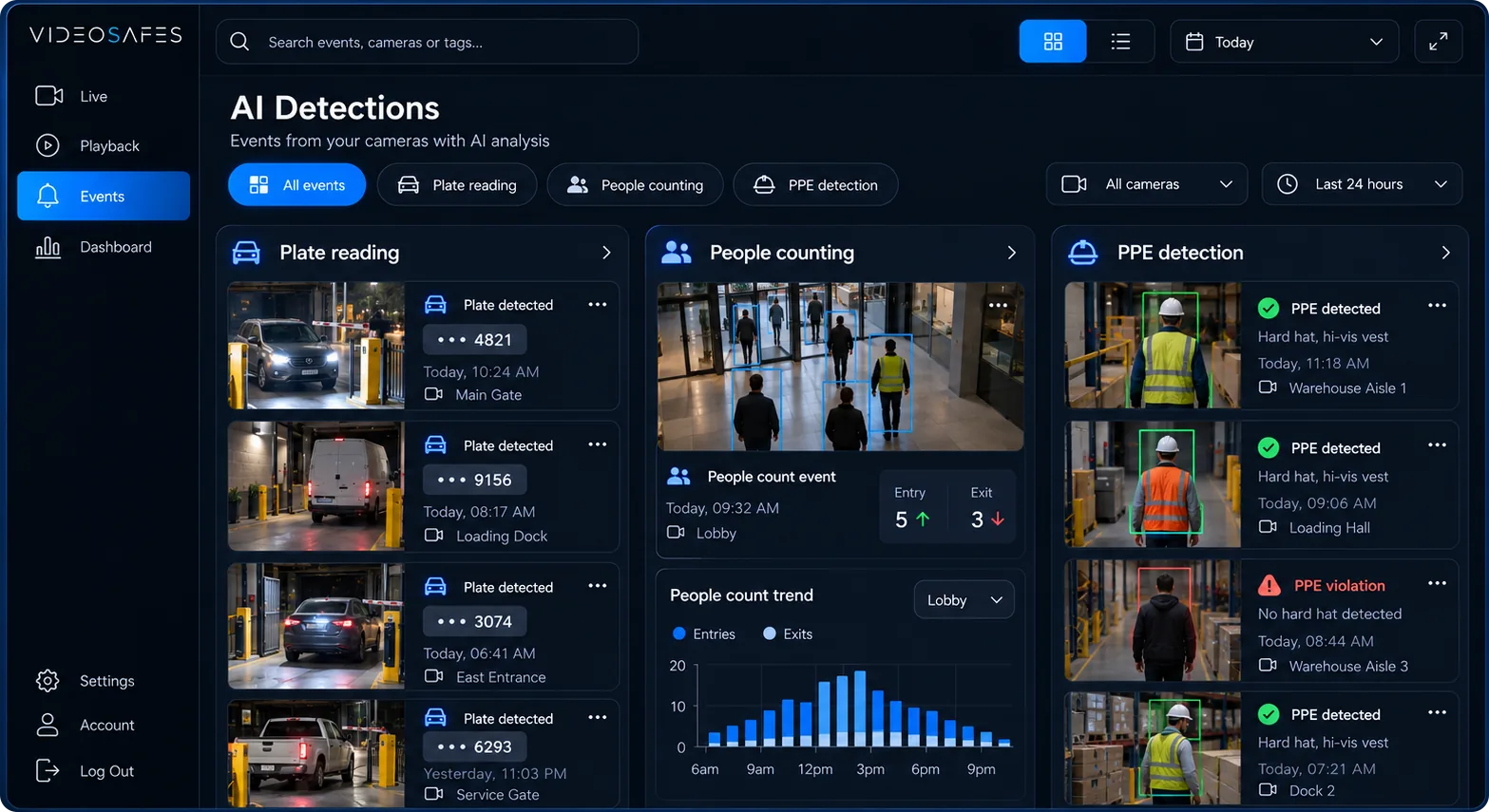
License plate recognition (plate reading) reads plates on vehicles passing compatible cameras at entrances, gates, and lots, then logs each read with a timestamp. When a question comes up about a specific vehicle, teams can search the plate instead of reviewing footage minute by minute.
The problem
Without a plate log, teams scrub through gate or lot footage frame by frame to find one vehicle from a specific window of time.
A vehicle that returns several times a week can be hard to flag manually across separate camera feeds.
Property managers and dealership teams often need a documented plate read, not just a description, to support a claim or report.
How it works
Plate reading is added to cameras positioned at gates, entrances, or lot lanes where vehicles pass at a readable angle and distance.
Each vehicle that passes a covered camera gets a logged plate read with a timestamp, building a searchable history over time.
Search a plate, a date range, or a camera to pull matching reads directly, then jump to the associated video.
Use cases
Log every vehicle that enters or exits through a gate camera to support incident review and access questions.
Track vehicle movement across lots and service lanes with plate reads tied to specific cameras and times.
Search a plate across multiple covered sites instead of pulling footage location by location.
What you get
Every read is logged with a timestamp and camera, so teams can search by plate instead of by memory.
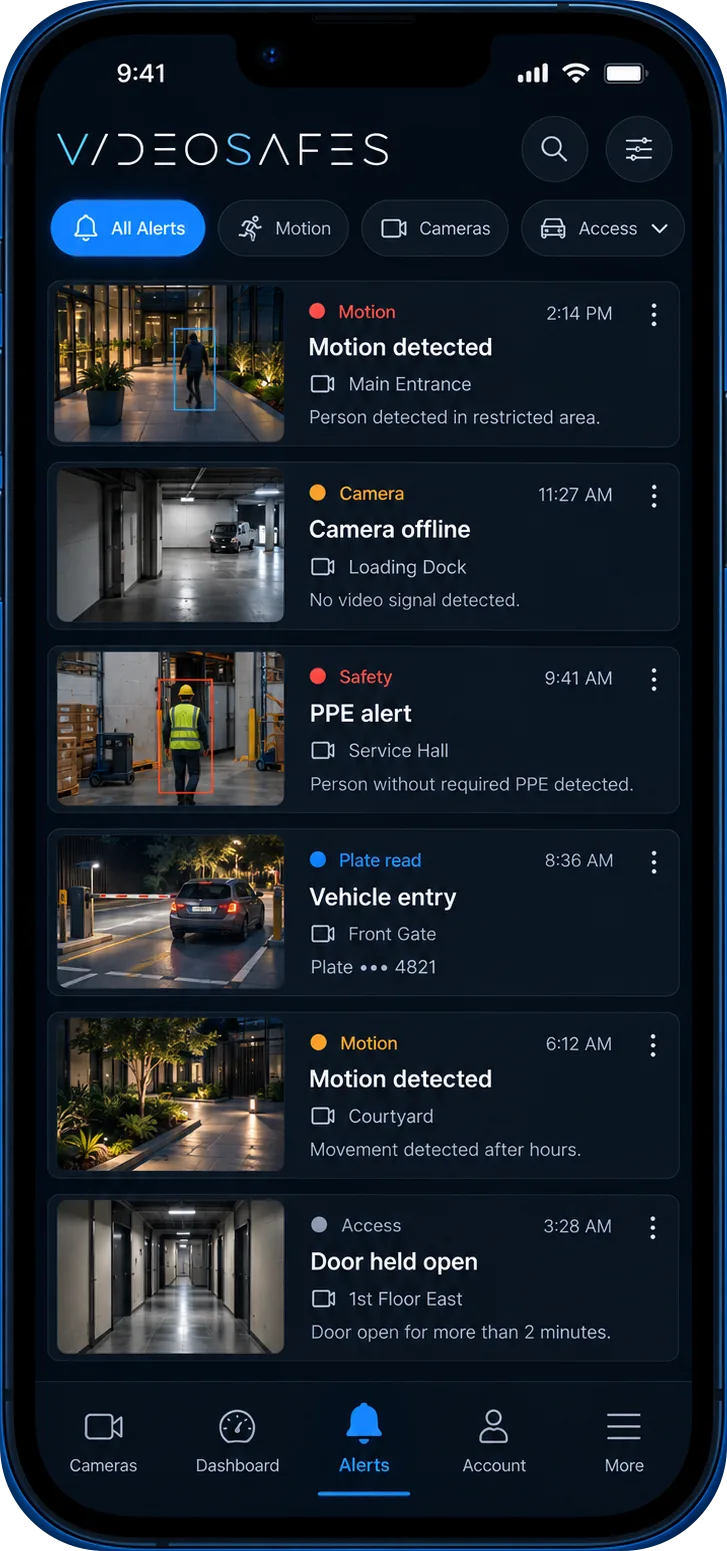
Pair a plate read with the matching video clip to support reports, claims, or follow-up questions.
plate reading builds on the same classification foundation used across VideoSafes, so vehicle events are already being tracked.
Add plate reading to the specific entrances or lanes that need it instead of licensing every camera on a site.
Good to know
FAQ
Common questions teams ask when evaluating Plate Reading for VideoSafes.
Cameras need the right position, angle, and image quality to read plates reliably. An online demo confirms which entrances, gates, or lanes are good candidates.
Plate reading is an optional add-on available where a site needs it, priced per covered camera rather than bundled into every plan by default.
Yes, for sites and cameras that have plate reading turned on. Teams can search a plate or date range instead of reviewing footage location by location.
Each read is logged with a timestamp and the source camera, giving teams a searchable history alongside the recorded video.
Related features
Smart Motion AI
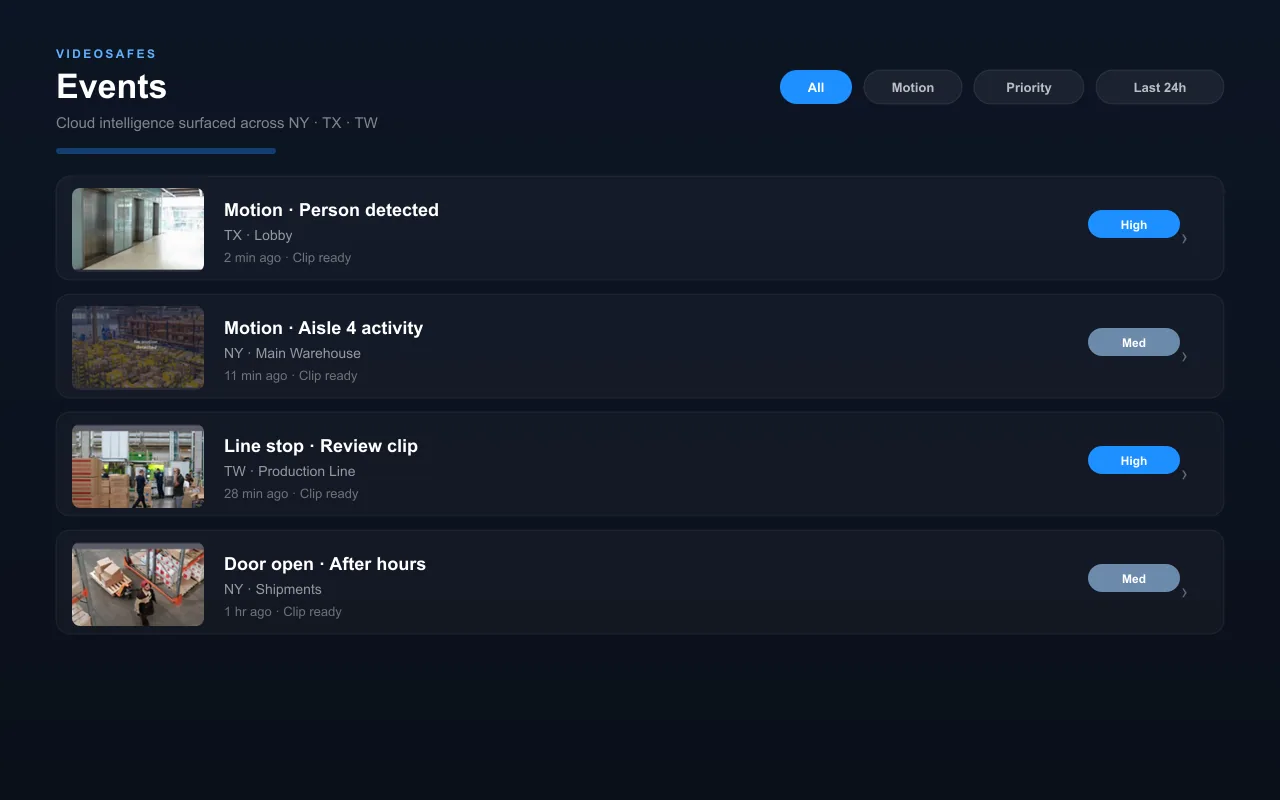
Classify motion as people, vehicles, or animals so teams can skip past irrelevant activity and review the moments that matter.

People Counting
Track how many people move through doors, floors, or zones over time to support staffing, capacity, and traffic decisions.
Activity History (Audit Logs)
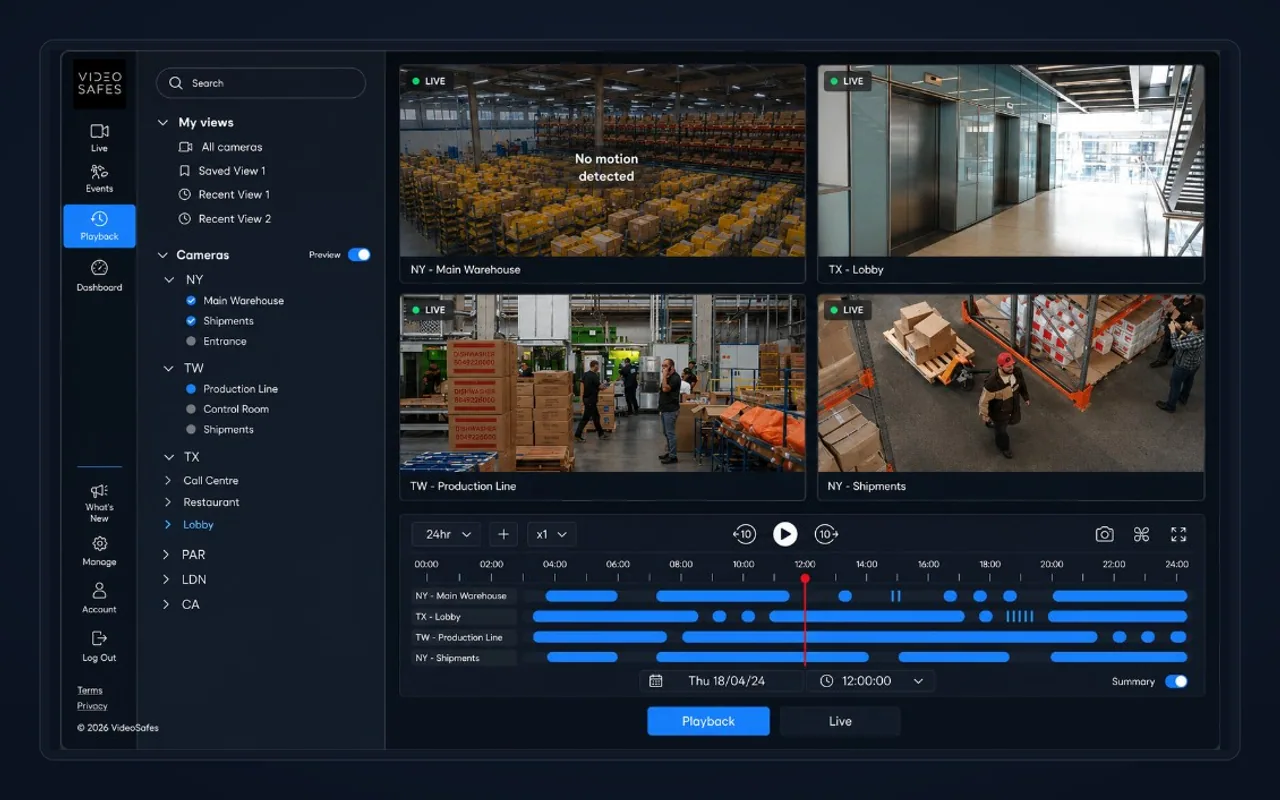
Review a record of logins and video access so administrators always know who used the system and when.

Share your gate, lane, or lot camera layout. We’ll confirm which locations are good spots for plate reading during an online demo.